SOLUTIONS
POST-DISCHARGE

Support transitional care after every discharge

Support Transitional Care Management (TCM) with first contacts scheduled within the TCM window, structured follow-up after discharge and early identification of patients who need attention, helping prevent avoidable readmissions and ED visits.
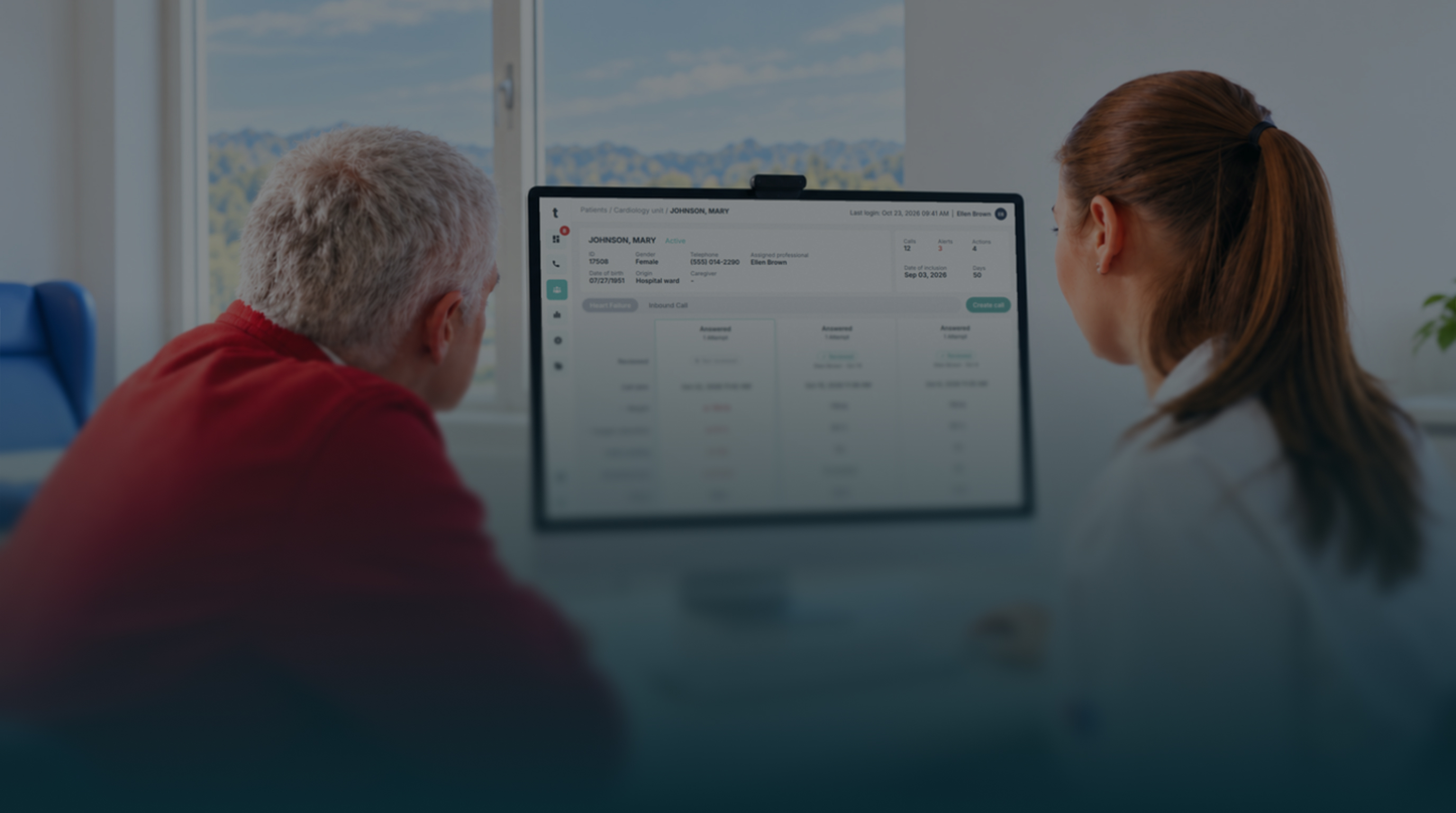
Healthcare professional reviewing a patient's follow-up on screen
THE SOLUTION

Contact at the moments that matter, with alerts for the cases that need review

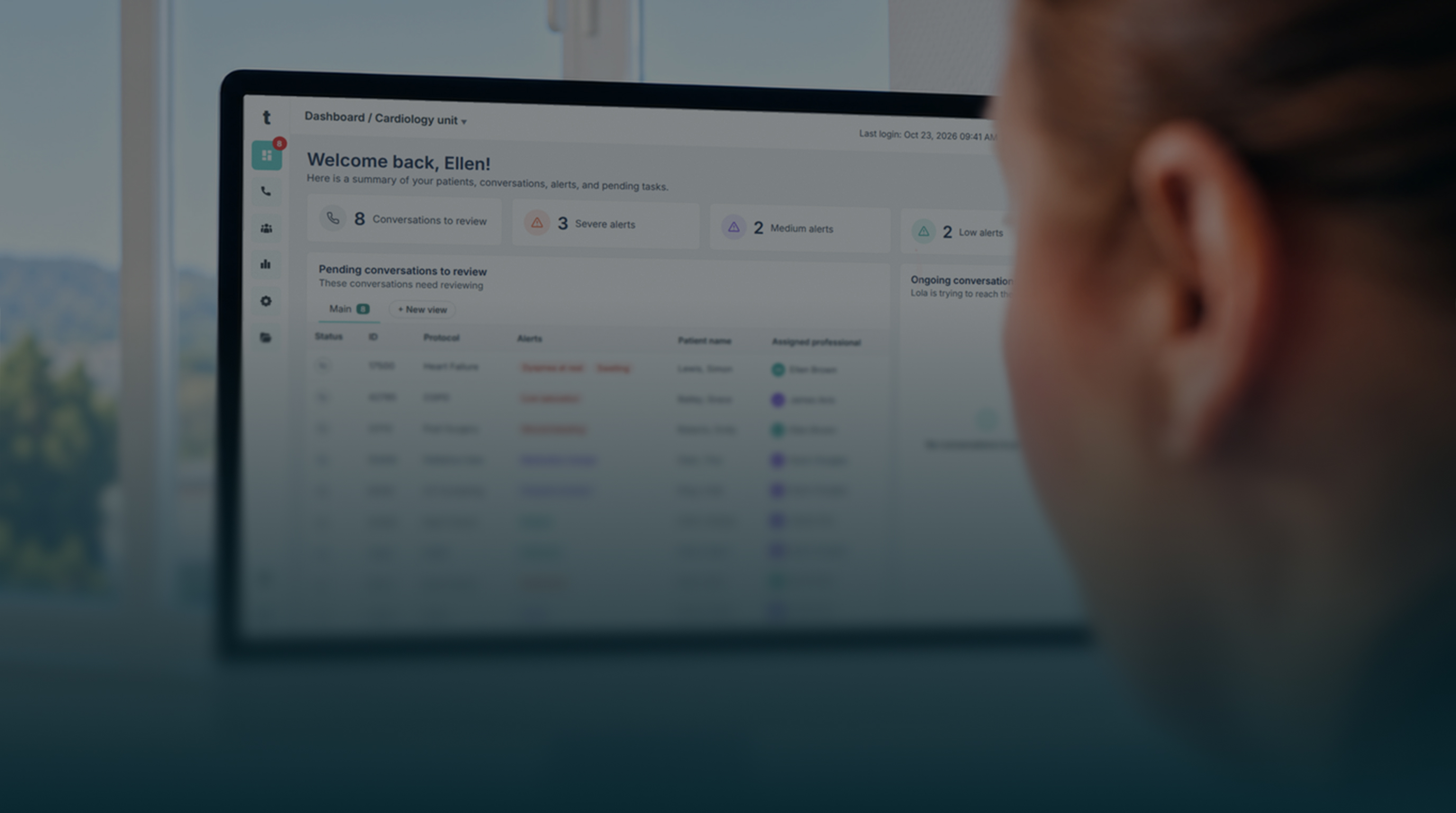
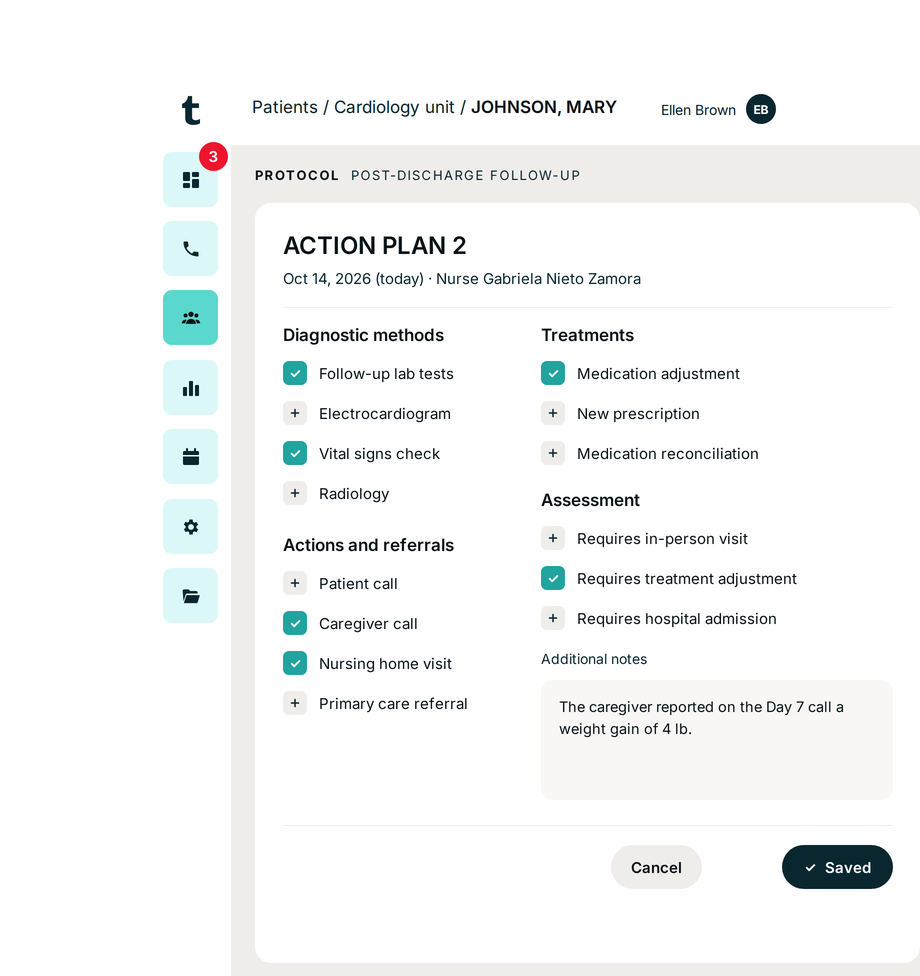
A patient's post-discharge care plan in Tucuvi Health Manager
A defined follow-up window

Contacts begin once the patient leaves the hospital and follow the schedule set for each discharge pathway, from the first 24 hours up to 30 days. The focus is recovery after the acute episode, not ongoing monitoring of the underlying condition.

Symptoms and recovery at home

Each contact collects how the patient has been feeling since leaving hospital, alongside symptoms, warning signs and home measurements included in the protocol.

Medication and treatment changes

Contacts check whether the patient has started the medication prescribed at discharge and is taking it as indicated, and record any questions about changes to their treatment, which are passed on to the care team.

Review, alerts and closing the episode

Responses outside the protocol’s criteria generate alerts, and the care team decides the next step. Each review is documented with a clinical note and the care plan. When the window ends, the team closes the episode or refers the patient to their usual care or to a long-term programme.

Protocols for diferent types of discharge

Protocols grounded in clinical practice guidelines and refined across previous implementations.

Wrist osteoarthritis follow-up after discharge
Assesses health status after hospital discharge in patients with wrist osteoarthritis.
Urinary tract infection symptom monitoring
Identifies signs and symptoms suggestive of a urinary tract infection.
Knee osteoarthritis follow-up after discharge
Assesses health status after hospital discharge in patients with knee osteoarthritis.
Postnatal follow-up
Contacts the patient after childbirth to record her recovery and answer questions.
Frailty follow-up after hospitalisation
Follow-up of patients with frailty after a hospital stay.
Follow-up after an A&E visit
Records the patient’s progress after an A&E visit and answers questions covered by the protocol.
Heart failure follow-up after discharge
Follow-up after discharge to identify signs of worsening and help prevent complications or readmissions in patients with heart failure.
RESULTS

Outcomes in the weeks after discharge

-19.6%
hospitalizations compared with the previous period in the same COPD patient population.
Post-discharge follow-up helps care teams monitor patient progress and identify cases requiring additional attention.
Reduced hospitalizations after discharge
Public Hospital
The program organizes post-discharge outreach and prioritizes reported issues. Nurses review cases and document their actions in the platform.
94.1%
reach and engagement per contact, across 4,011 contacts with 877 patients.
Autonomous follow-up at weeks 1, 2 and 4 keeps patients connected to their care teams after discharge.
High Patient Engagement through recovery
Large Private Hospital
Success stories

Outcomes in the weeks after discharge

Success Story
Patient reach and engagement with clinical AI Report
94.1%
Reach and engagement
See success story →
Success Story
Expanding nursing capacity in post-infiltration follow-up | Large university hospital
4x
augmented nurse capacity from post-infiltration follow-up
See success story →
Success Story
Increasing post-emergency follow-up response rates | Mid-sized private university hospital
+37,8%
Increased response rate
See success story →
Dr. Juan Ramón Gimeno in his consulting room

“Since we started using LOLA, hospital admissions for acute deterioration have been avoided in 6 out of 10 cases. It helps us reach a broader patient population with the same team and anticipate when a condition may worsen.”

Dr. Ignacio Morrás
Internal Medicine Physician | Public University Hospital in Spain
BENEFITS

The value of follow-up when patients return home

CONTINUITY

Every Discharge Contacted Within the TCM Window

Contacts start within two business days of discharge and are documented for the care team, supporting your TCM program.

PATIENT-FIRST

Medication Issues Caught Early

Unfilled prescriptions and medication questions reach the care team, supporting medication reconciliation after discharge (HEDIS TRC).

CAPACITY

Fewer Avoidable Readmissions

Issues surface in the first days at home, before they lead to an ED visit or readmission, supporting HRRP and HEDIS PCR performance.

Hospital waiting room
RELATED SOLUTIONS

Discharge is one step in the pathway, not the end

Preparation for tests and surgery

Before the same procedure: patients arrive prepared and procedures are not cancelled.

Chronic and long-term care

When the post-discharge period ends and the patient needs ongoing follow-up.

Access and demand management

Reviews arising from follow-up are booked, confirmed and rescheduled without going through the team.

Extend post-discharge follow-up without increasing the nursing workload

Discover how LOLA can support your patients in the critical days after discharge, prioritise the cases that need review and give the team greater visibility.