SOLUTIONS

One platform for every stage of the care pathway.

Supporting healthcare teams in the clinical and administrative processes that involve contact with patients.

A secure and regulated platform
CE
ISO 13485
ISO 27001
GDPR
ENS
SOLUTIONS FOR YOUR ORGANISATION

From clinical follow-up to access management.

Clinical capabilities

‍

Chronic and long-term care

Maintain continuity of care between appointments and help teams manage larger populations according to each patient’s needs.

-56%
Reduction in emergency visits.
Explore our solution →

Perioperative care

Support patients before and after a procedure, helping with preparation and follow-up and identifying situations that need clinical attention.

x5
Increase in nursing capacity after day surgery.
Explore our solution →

Post-discharge care

Maintain structured follow-up after hospital discharge and identify patients who need additional professional attention.

-19%
Reduction in hospitalisations in the COPD population.
Explore our solution →

Treatment support and adherence

Identifies barriers to treatment continuity and helps patients follow the steps in their treatment plan.
‍

-10,5%
Drop-out from CPAP therapy. Home respiratory therapy provider.
Explore our solution →

Access and demand management

‍

Access and Demand Management

Reach patients, collect information and identify needs or issues, helping healthcare teams prioritize actions and manage demand.

-80%
reduction in referral-to-screening time, from 5 weeks to under 1 week.
Explore our solution →

Prevention, screening and outreach

Engage the target population on an ongoing basis and help close care gaps before they become more complex problems.

4x
Vaccinations completed in 30 days.
Explore our solution →

Protocols adapted to your service.

Start from workflows grounded in clinical guidelines and refined across previous implementations. Configure the timing, patient outreach, information collected and escalation criteria around your organization’s requirements, and work with our clinical team to assess new use cases.

1. Identify

We map your most critical clinical processes with you and start from a protocol already proven in other services, not from scratch.

Implementation built on a clinical foundation already proven in hospitals.
Healthcare professional reviewing a Care Plan on the Tucuvi platform

2. Configure

We adapt the protocol to your care pathway: when contact begins, what LOLA collects, which responses generate an alert and who each case is escalated to.

Thresholds and escalation pathways defined by your team
Healthcare professional reviewing a Care Plan on the Tucuvi platform

3. Validate

The clinical team reviews and approves the protocol before it goes live with patients.

No protocol goes live without clinical approval
Healthcare professional reviewing a Care Plan on the Tucuvi platform

4. Go live and refine

We launch the protocol within the service’s workflow and refine it using real-world data.

A protocol that evolves with your service
Healthcare professional reviewing a Care Plan on the Tucuvi platform
Wheelchair use assessment
Collects the information needed to prepare the wheelchair assessment and prioritise the waiting list.
Diagnostic imaging survey
Records patient feedback after a diagnostic imaging test.
Clinical laboratory satisfaction survey
Records patient feedback after a blood test or laboratory visit.
Patient satisfaction survey
Records the patient’s rating of the care received.
Inbound patient messages
Records the message the patient leaves and passes it on to the clinical team.
Appointment rescheduling
Manages appointment changes and confirms the new slot.
Appointment reminders and confirmation
Confirms attendance and records whether the patient wants to change or cancel the appointment.
Appointment booking
Books the appointment by matching available slots with the patient’s preferences.
Primary care demand management
Books appointments according to the patient’s reason for contact in primary care.
Missed vaccination appointment follow-up
Contacts patients who missed their vaccination appointment, records the reason and offers a new one.
Vaccination appointment booking
Contacts patients who accepted vaccination but have no appointment yet and books it in the same contact.
Vaccination campaign for at-risk patients
Contacts patients whose clinical situation calls for vaccination, offers the recommended vaccine and books the appointment.
Pneumococcal vaccination campaign
Invites the target population to get the pneumococcal vaccine, answers questions covered by the protocol and books the appointment.
Bowel cancer screening campaign
Invites the eligible population to bowel cancer screening and records their response.
Shingles vaccination campaign
Invites the target population to get the shingles vaccine, answers questions covered by the protocol and books the appointment.
Flu vaccination campaign
Invites the target population to get their flu vaccine and records their response.
Breast cancer screening campaign
Invites the eligible population to breast cancer screening and records their response.
Post-TAVI follow-up
Identifies signs of complications after transcatheter aortic valve implantation.
Follow-up after pacemaker or ICD implantation
Records the patient’s progress after pacemaker or implantable cardioverter-defibrillator implantation.
Pre-anaesthetic classification
Collects pre-anaesthetic information so the team can classify each patient.
Post-surgical sepsis detection
Records warning signs after surgery and generates an alert when they meet the team’s criteria.
Minor surgery follow-up
Records the patient’s progress after discharge from minor surgery.
Endoscopy preparation
Reminds patients of preparation steps and documentation for their endoscopy.
Day surgery follow-up
Contacts the patient at home after day surgery and records their recovery.
Pre-anaesthetic assessment
Collects pre-anaesthetic information for the anaesthesia team.
Pre-TAVI monitoring
Identifies signs of worsening that may support bringing forward transcatheter aortic valve implantation.
Pre-operative cardiovascular monitoring
Monitors the cardiovascular status of patients awaiting cardiovascular surgery.
Surgery preparation
Checks the patient’s health and reminds them of the documentation needed before surgery.
Wrist osteoarthritis follow-up after discharge
Assesses health status after hospital discharge in patients with wrist osteoarthritis.
Urinary tract infection symptom monitoring
Identifies signs and symptoms suggestive of a urinary tract infection.
Knee osteoarthritis follow-up after discharge
Assesses health status after hospital discharge in patients with knee osteoarthritis.
Postnatal follow-up
Contacts the patient after childbirth to record her recovery and answer questions.
Frailty follow-up after hospitalisation
Follow-up of patients with frailty after a hospital stay.
Follow-up after an A&E visit
Records the patient’s progress after an A&E visit and answers questions covered by the protocol.
Heart failure follow-up after discharge
Follow-up after discharge to identify signs of worsening and help prevent complications or readmissions in patients with heart failure.
Sleep apnoea: CPAP follow-up
Records symptoms, adherence and CPAP use in patients with sleep apnoea.
HCM symptom assessment (HCMSQ)
Records the patient’s symptoms during treatment using the HCMSQ questionnaire.
Malignant bowel obstruction follow-up
Follow-up of symptoms, medication and wellbeing in patients with ovarian cancer and malignant bowel obstruction.
Chronic lymphocytic leukaemia treatment follow-up
Identifies side effects of BTK inhibitor, BCL-2 inhibitor or anti-CD20 treatment in patients with CLL.
Prostate cancer follow-up
Follow-up of signs of progression, medication and wellbeing in patients with prostate cancer.
Medication adherence in heart failure with reduced ejection fraction
Assesses adherence to quadruple therapy and diuretic treatment in patients with heart failure with reduced ejection fraction.
End-stage kidney disease follow-up
Follow-up of patients with end-stage chronic kidney disease.
Type 2 diabetes follow-up
Follow-up of patients with type 2 diabetes.
Anxiety and depression assessment (Goldberg)
Records anxiety and depression symptoms using the Goldberg scale.
Emotional wellbeing follow-up
Regular follow-up of the patient’s emotional state.
Heart failure self-care assessment (EHFScBS)
Assesses self-care habits in patients with heart failure using the EHFScBS scale.
Quality of life assessment (EQ-5D-5L)
Measures health status and quality of life with the EQ-5D-5L questionnaire.
Pacemaker remote transmission support
Supports patients during pacemaker data transmission and records any incidents for the team.
Hospital-at-home follow-up
Follow-up of symptoms, medication and wellbeing in patients receiving hospital-at-home care.
Palliative care follow-up
Follow-up of symptoms, medication and wellbeing in patients receiving palliative care.
Systemic lupus erythematosus follow-up
Follow-up of symptoms, medication and wellbeing in patients with moderate to severe lupus.
Inflammatory bowel disease follow-up
Follow-up of symptoms, medication and wellbeing in patients with intestinal disease.
Advanced chronic kidney disease follow-up
Follow-up of symptoms suggesting progression in patients with advanced chronic kidney disease.
Severe asthma follow-up
Follow-up of symptoms, disease control, medication and wellbeing in patients with severe asthma.
Complex chronic patient follow-up
Follow-up of symptoms, medication and wellbeing in complex chronic patients, mainly with COPD and heart failure.
Heart failure follow-up
Regular follow-up to identify exacerbations or situations that need intervention in patients with heart failure.
Explore Safety & Quality
FROM CLINICAL TEAMS

Teams already working with Tucuvi

Dr. Juan Ramón Gimeno, cardiologist at Hospital Clínico Universitario Virgen de la Arrixaca
+80%
of nursing time freed up from post ambulatory surgery follow-up
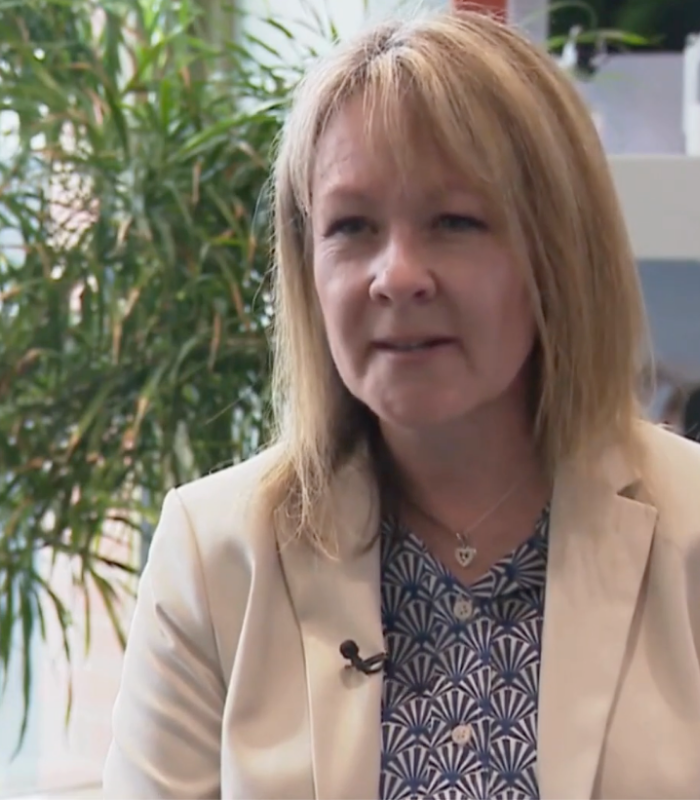
''Tucuvi has helped us tackle our growing waiting list. By identifying which patients need attention quickly through calls, we can remove people from the waiting list faster.''
Bridgit Vorster-Gibbons
Senior Occupational therapist
Micaela Seemann Monteiro - Chief Medical Officer for Digital
+80%
of nursing time freed up from post ambulatory surgery follow-up
“The difference Tucuvi makes is that it transform protocols and guidelines into actual workflows. We can now contact 100% of our patients consistently, while our central nursing team can dedicate their knowledge and experience to high-clinical value tasks.
Micaela Seemann Monteiro
Chief Medical Officer for Digital

Discover how Tucuvi can fit into your care pathway