SOLUTIONS
PERIOPERATIVE CARE

Help patients prepare for their procedure and stay connected through recovery.

Support patients before and after a procedure, helping with preparation and follow-up and identifying situations that need clinical attention.

https://www.youtube.com/watch?v=NzgOKNx9BVw


Preparation and recovery within one episode

Before the procedure

AT SCHEDULING

Appointment confirmation

Confirms that the patient can attend and manages change requests through the organisation’s pathway.”

WEEKS BEFORE

Pre-procedure clinical information

Collects the clinical information the procedure requires in a structured way, such as the pre-anaesthesia questionnaire, including medical history and usual medication, to support the team’s assessment before the test or procedure.

DAYS BEFORE

Preparation instructions

Review the care team’s instructions for fasting, preparation and medications. Capture difficulties or questions that require professional review.

After the procedure

AFTER THE PROCEDURE

Recovery follow-up

Records symptoms and recovery information, for example after day surgery, such as pain intensity, response to medication and oral tolerance, when included in the procedure’s protocol.

AS DEFINED BY THE PROTOCOL

Follow-up completion or escalation

Prioritize cases that meet defined criteria for professional review. Complete follow-up according to the program’s rules.

PERIOPERATIVE CARE PROTOCOLS

Support for different procedures and points in the episode

Protocols grounded in clinical practice guidelines and refined across previous implementations.

Post-TAVI follow-up
Identifies signs of complications after transcatheter aortic valve implantation.
Pre-anaesthetic classification
Collects pre-anaesthetic information so the team can classify each patient.
Post-surgical sepsis detection
Records warning signs after surgery and generates an alert when they meet the team’s criteria.
Minor surgery follow-up
Records the patient’s progress after discharge from minor surgery.
Endoscopy preparation
Reminds patients of preparation steps and documentation for their endoscopy.
Day surgery follow-up
Contacts the patient at home after day surgery and records their recovery.
Pre-anaesthetic assessment
Collects pre-anaesthetic information for the anaesthesia team.
Pre-TAVI monitoring
Identifies signs of worsening that may support bringing forward transcatheter aortic valve implantation.
Pre-operative cardiovascular monitoring
Monitors the cardiovascular status of patients awaiting cardiovascular surgery.
Surgery preparation
Checks the patient’s health and reminds them of the documentation needed before surgery.
EVIDENCE

Extend team capacity for procedure preparation and follow-up

Success study
Patient reach and engagement with clinical AI Report
94.1%
Reach and engagement
See success story →
Success study
Supporting early discharge after TAVI
93.92%
of calls completed
See success story →
Success study
Expanding pre-anesthesia assessment capacity
2x
Augmented team capacity
See success story →
Success study
Expanding nursing capacity in post-surgery follow-up
5x
Augmented nurse capacity
See success story →
Success study
Expanding nursing capacity in post-surgery follow-up
10x
augmented nurse capacity in post-surgery follow-up
See success story →
Raquel Semper Nurse Lead for the Tele-TAVI Project at Dr. Balmis University Hospital

“We can now reliably reach 100% of our patients after major ambulatory surgery, while our central nursing team can dedicate its knowledge and expertise to high-value clinical tasks.”

Micaela Seemann Monteiro
Medical Director of Digital Transformation, CUF
BENEFITS

What changes in patient preparation and recovery

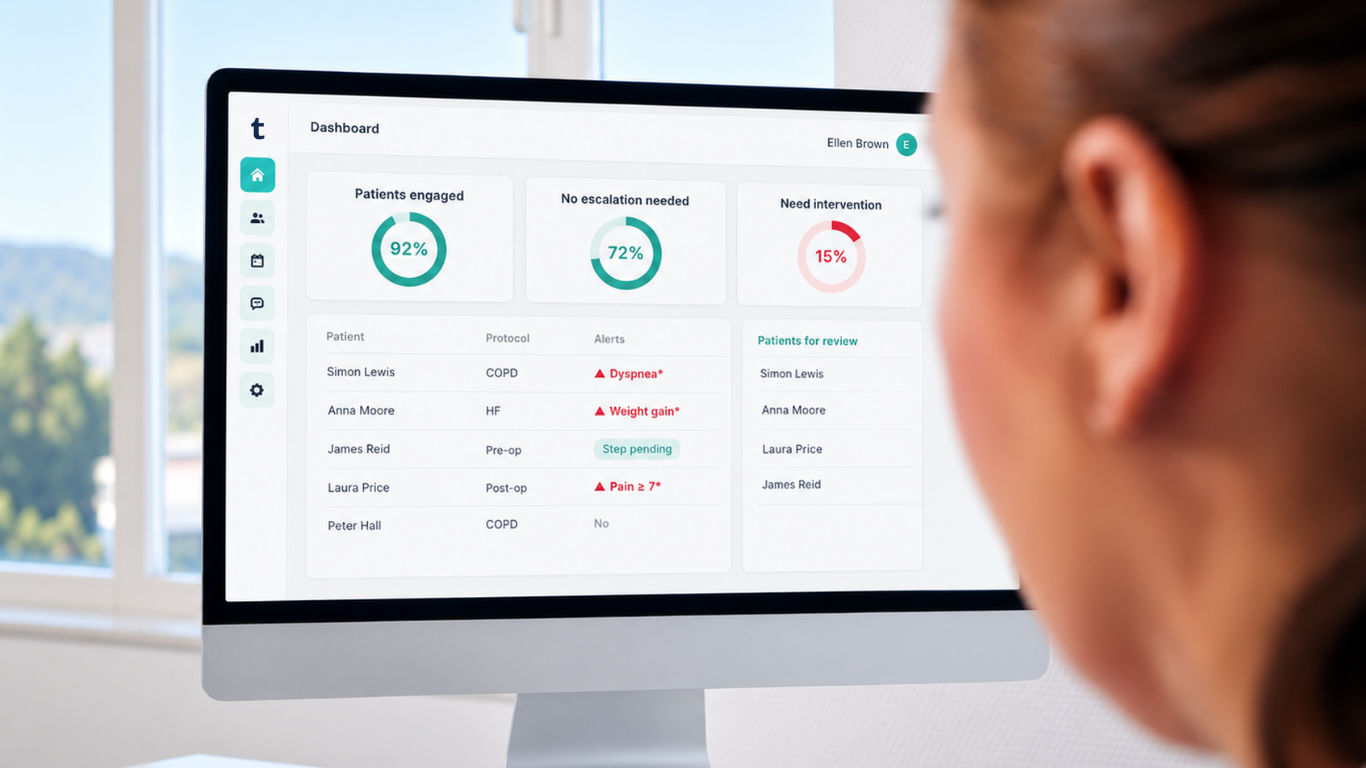
Nurse reviewing a patient's progress on screen
More support for patient preparation
Pre-procedure instructions help patients follow preparation requirements and communicate difficulties before their test or procedure.
Complete Pre-procedure Information on Time
Clinical information and questionnaires are collected before the procedure, so the care team can assess each patient in advance rather than on the day.
Protect the Surgical Schedule
Patients who arrive prepared are less likely to be cancelled on the day, so operating room time and staff hours are used as planned.
A same-day check after discharge
A contact on the day of discharge confirms how the patient is doing after the procedure and flags issues that need the care team’s review.
RELATED SOLUTIONS

Support the steps before and after the episode

Post-discharge care

‍

Continue follow-up in the days after the patient leaves the hospital.

Patient access

Schedule, confirm and reschedule appointments, and help fill newly available slots.

Preventive care

Engage eligible patients before they have scheduled an appointment.

Bring perioperative follow-up into your care team’s workflow.