Care for more patients.
More time for your care teams.
Care for more patients and make better use of available capacity, while maintaining quality of care and patient experience.















Turn available capacity into more care.

Apply capacity where it is needed most
Address pressure points across patient access, preparation, follow-up and service delivery, where manual processes or communication can limit available capacity.
Turn information into action
Use structured information from patient interactions and existing healthcare systems to understand what is happening, identify incomplete steps and determine where attention is needed.
Maintain quality as activity grows
Deliver consistent patient follow-up and support while preserving patient experience, professional oversight and clinical quality.
Grow sustainably
Support more care activity without proportionally increasing clinical workload and operating costs.
Add capacity where your organization needs it most.
Access & Demand Management
Help patients confirm appointments, communicate cancellations or rescheduling needs, and complete administrative tasks. Reduce manual follow-up, help prevent no-shows, and make better use of available appointment capacity.

Perioperative Care
Support patients before and after procedures, helping teams complete preparation and follow-up activities consistently without equivalent increases in nursing workload.

Post-discharge Care
Maintain contact with patients after an emergency department visit, surgery, or hospital discharge. Provide structured follow-up to monitor their recovery, identify potential complications, and alert care teams when intervention is needed.

Chronic & Longitudinal Care
Support ongoing patient journeys through structured follow-up, helping care teams identify changes and prioritize patients who need professional attention.

Prevention, Screening & Patient Recruitment
Support preventive care initiatives and population outreach programs, helping organizations engage eligible patients and complete preventive activities without proportionally increasing manual outreach.

Adherence & Treatment Support
Identify barriers to treatment continuity and support patients through structured follow-up, helping reduce dropout from ongoing therapies.
Proven in private healthcare delivery
See how private healthcare organizations use Tucuvi to extend care capacity while maintaining quality and professional focus.

scale across a large multi-site health system.

patients that need me and reinforcing health education.
Take a minute to discover Tucuvi
What greater care capacity means for private healthcare organizations.
Configurable Care Execution
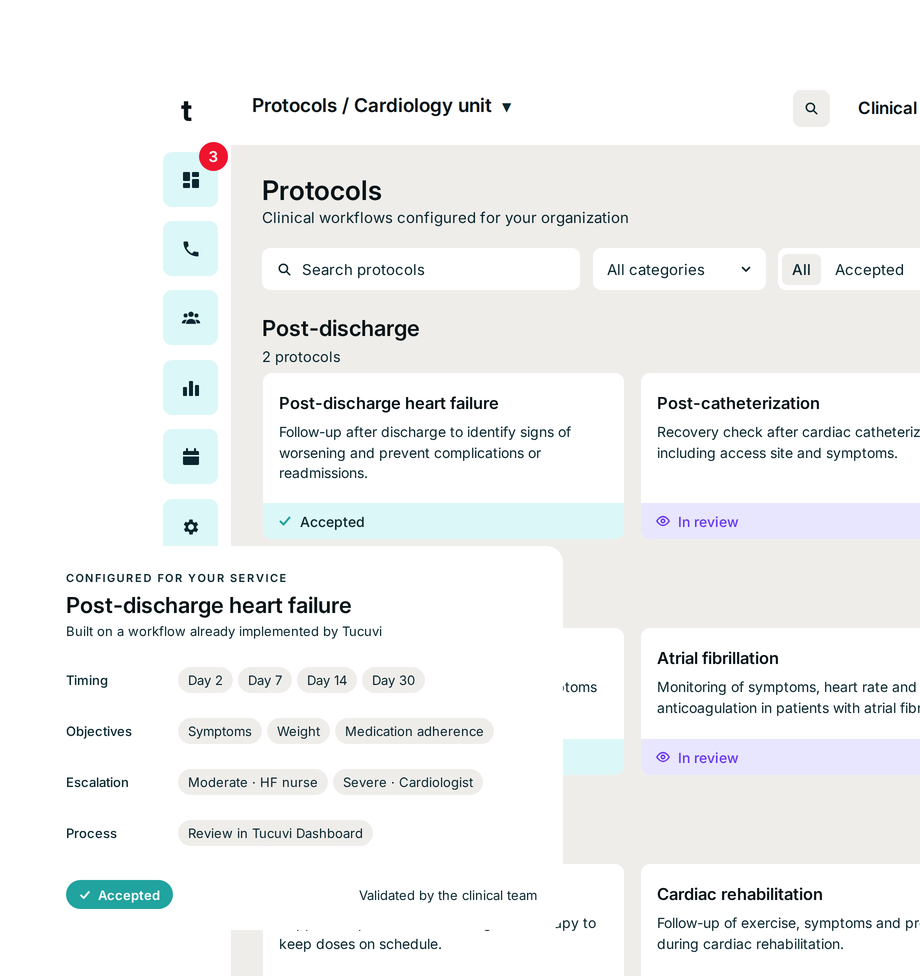
Configure Care Plans around each organization's clinical protocols, processes, timing, objectives and escalation criteria, building on workflows already implemented by Tucuvi.
Patient Communication
Engage patients when the pathway requires it through inbound and outbound voice with LOLA®, together with complementary channels such as SMS.

Prioritization & Escalation
Apply defined criteria to identify exceptions, prioritize patients and route cases requiring action to the appropriate team.
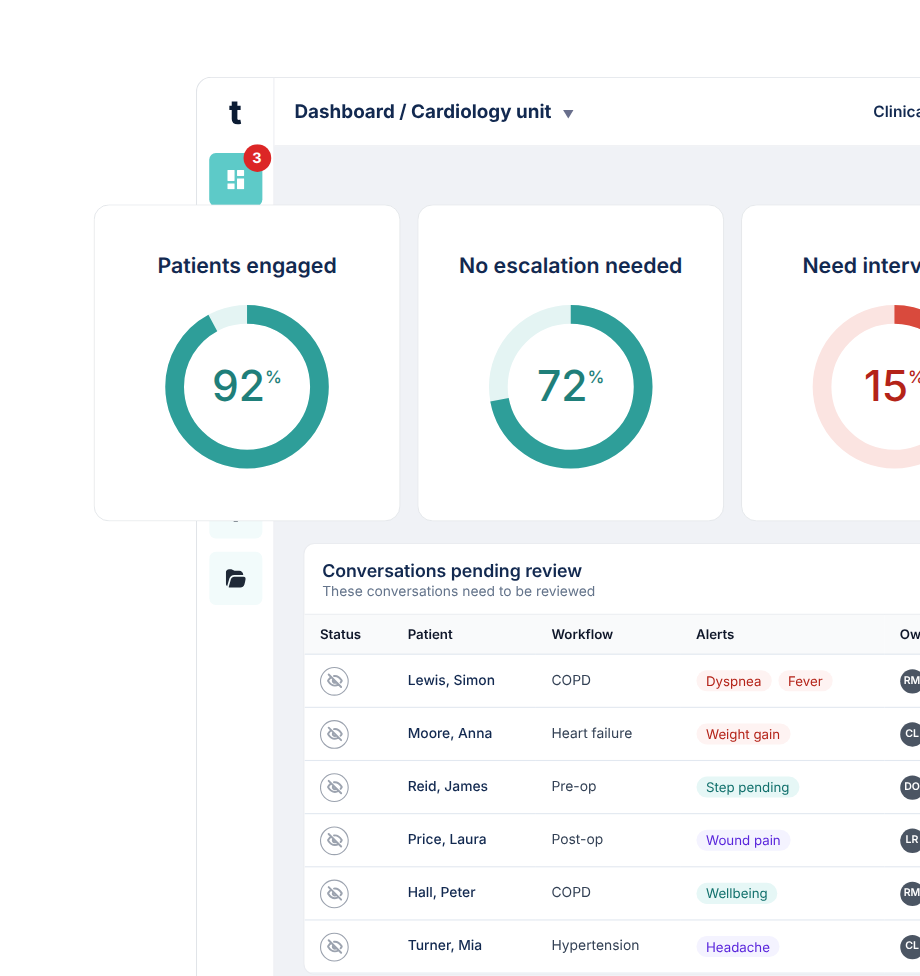
Meaningful Clinical Information & Insights
Use relevant information from both existing healthcare systems and patients to understand what is happening, what remains incomplete and what should happen next.

Interoperability
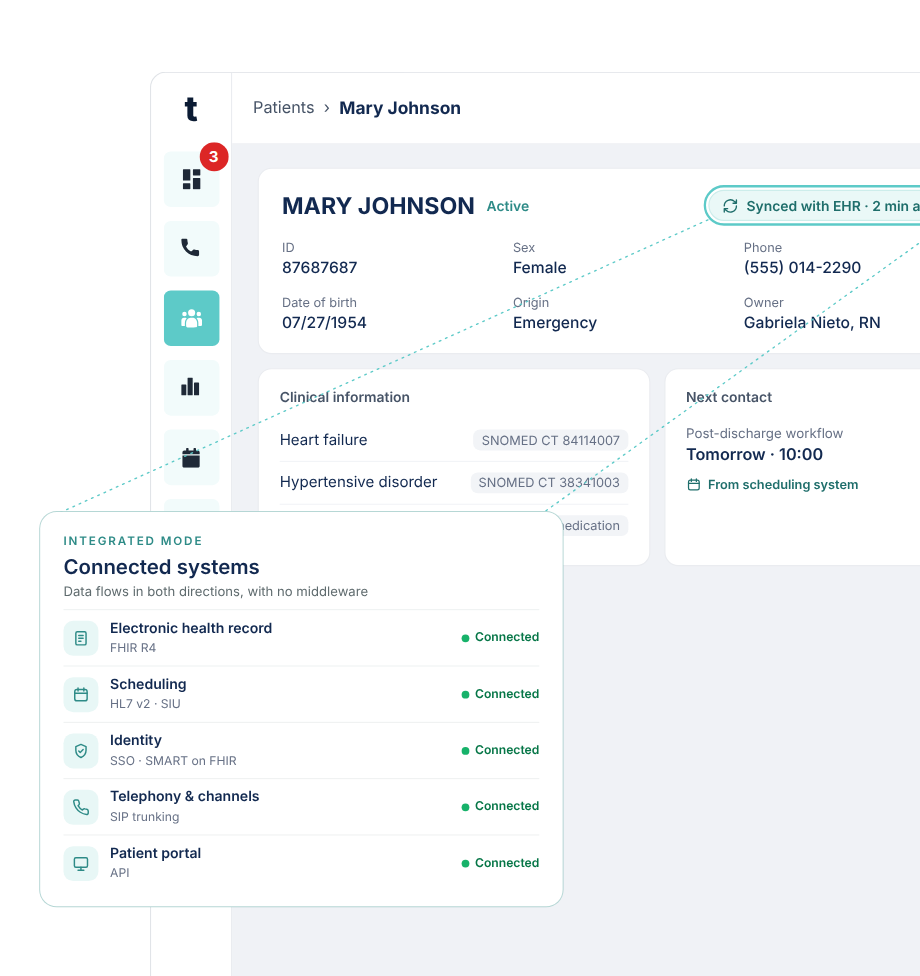
Use Tucuvi Health Manager standalone or connected to your EHR and CRM. Trigger LOLA from clinical events, write results back to the patient record and route follow-up into your team’s existing workflow.







Frequently Asked Questions
Tucuvi helps private healthcare organizations make better use of their care capacity by running patient outreach and follow-up processes at scale. Its AI Care Management platform makes it possible to support more patients, reduce repetitive tasks and focus professional time on the activities that require clinical attention.
Tucuvi supports patient access and administrative workflows, perioperative care, post-discharge follow-up, chronic care, prevention, screening, and treatment adherence.
Across these pathways, Tucuvi helps healthcare teams contact patients, collect structured information, identify pending steps, and flag situations requiring professional attention. Each program follows the organization's protocols, workflows, and escalation criteria, while healthcare professionals retain control over clinical decisions.
Tucuvi helps run the preparation and follow-up workflows defined by the hospital, from checking requirements and collecting information to identifying pending steps or situations that need attention. Professionals remain in control of the process and of clinical decisions.
Tucuvi makes it easier for patients to stay connected with their care teams through natural, accessible conversations with LOLA, without requiring apps or patient portals. Patients receive timely follow-up, can share their needs and concerns, and are connected to healthcare professionals when additional attention is needed. This helps deliver a more consistent and accessible care experience.
Unlike voice AI solutions focused primarily on administrative tasks, Tucuvi supports both administrative and clinical care pathways, including post-discharge follow-up and chronic care management.
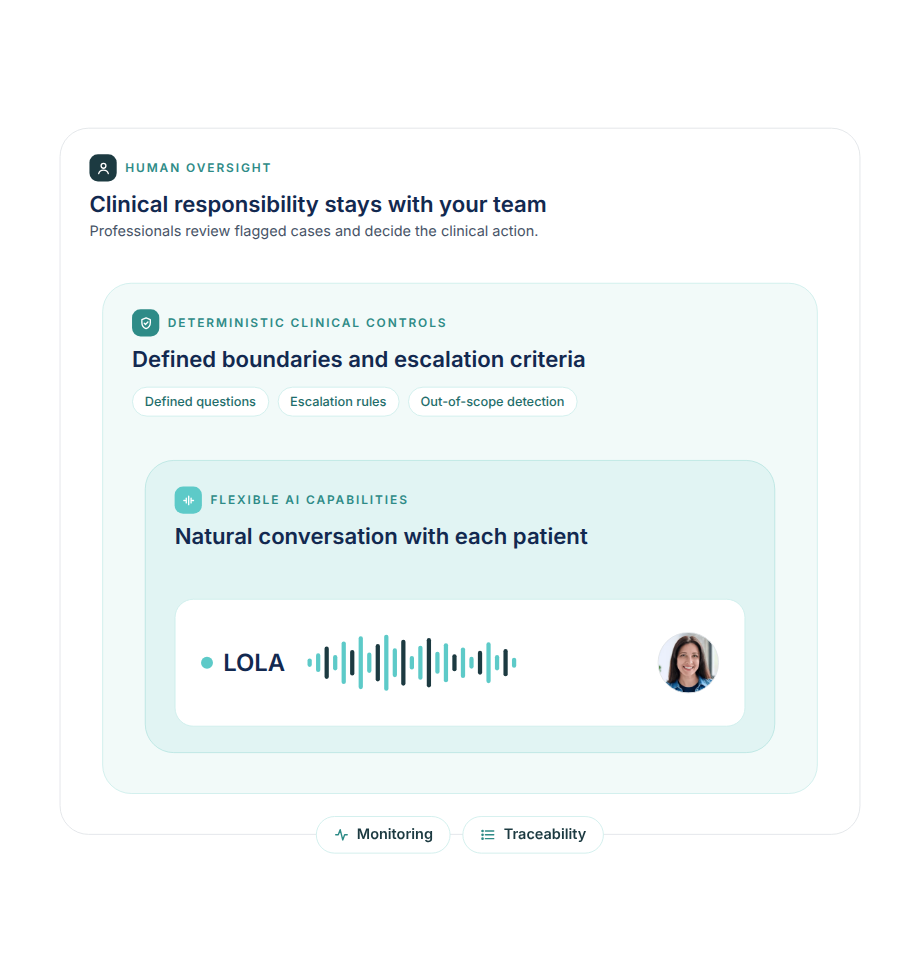
LOLA® engages patients through natural phone conversations, while Tucuvi Health Manager structures clinical information, follows predefined protocols, and alerts care teams when intervention is needed.
Patients have responded positively to speaking with LOLA, including older adults and those less familiar with digital tools. Tucuvi Health Manager is also CE-marked as a Class IIb medical device under the EU MDR, reflecting its clinically governed approach to AI-powered care management
Yes. Tucuvi Health Manager runs multi-step processes, from patient outreach to information collection and identifying follow-up needs. It combines Agentic AI capabilities with protocols, controls and professional oversight, keeping clinical decisions in the hands of care teams.
Yes. Tucuvi Health Manager makes it possible to set common protocols and workflows while adapting them to each site's needs. This helps run processes consistently across hospitals, with the integrations and oversight criteria defined by the organization.
Not necessarily. Tucuvi can be deployed without full integration from day one, depending on the care pathway. It supports different levels of interoperability, from standalone operation and structured data exchange to integration with existing EHR systems, adapting to each organization's technical infrastructure and operational needs.