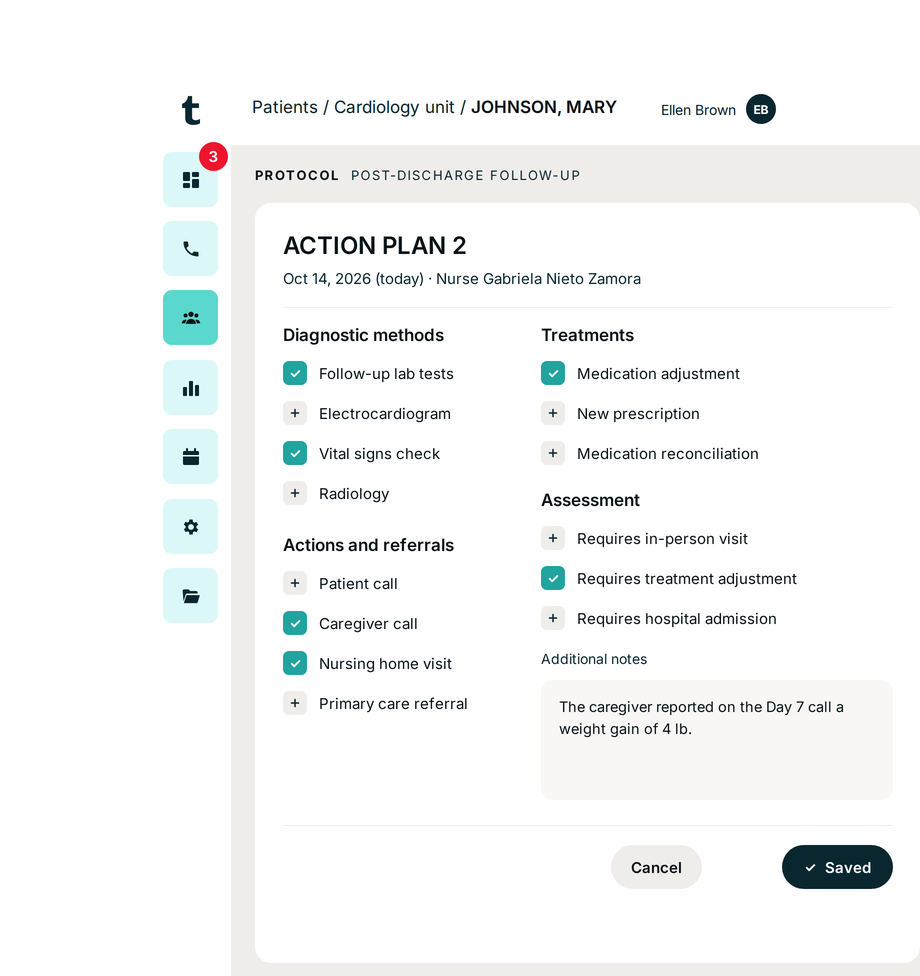
Follow-up after discharge for your patients.
Maintain structured follow-up after hospital discharge and identify the patients who need additional clinical attention.
https://vimeo.com/1239568853/405962a70c?fl=tl&fe=ec&share=copy
Follow-up after discharge for your patients.
Maintain structured follow-up after hospital discharge and identify the patients who need additional clinical attention.
Engage patients at key moments and alert care teams when clinical review is needed.
Contacts begin once the patient leaves hospital and follow a schedule set for the pathway. The focus is recovery after the acute episode, not ongoing monitoring of the underlying condition.
Each contact collects how the patient has been feeling since leaving hospital, alongside symptoms, warning signs and home measurements included in the protocol.
Contacts check whether the patient has started the medication prescribed at discharge and is taking it as indicated, and record any questions about changes to their treatment, which are passed on to the care team.
Responses outside the protocol’s criteria generate alerts, and the care team decides the next step. Each review is documented with a clinical note and the care plan. When the window ends, the team closes the episode or refers the patient to their usual care or to a long-term programme.
Protocols for diferent types of discharge
Protocols grounded in clinical practice guidelines and refined across previous implementations.
Continuity in follow-up. Evidence from patient outcomes.

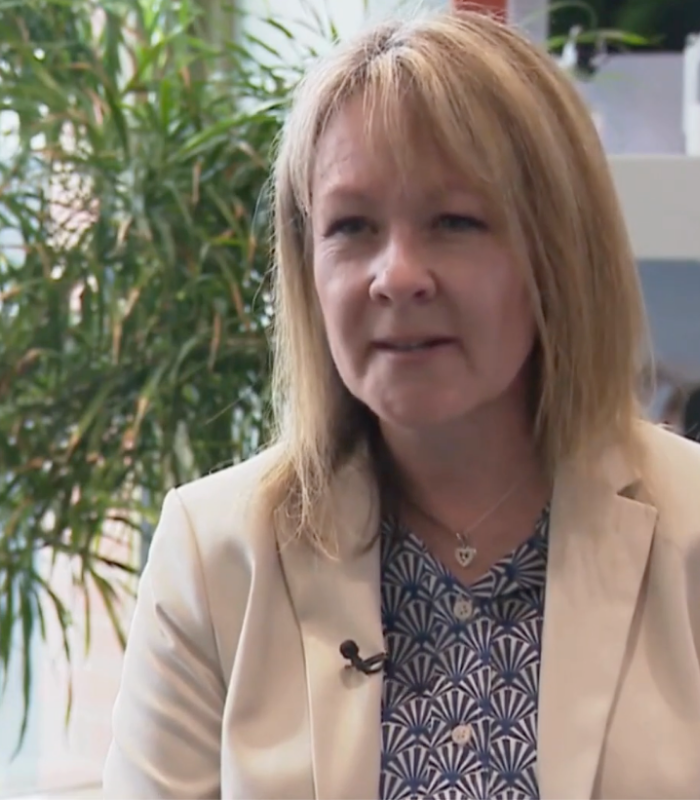


“Since we started using LOLA, hospital admissions for acute deterioration have been avoided in 6 out of 10 cases. It helps us reach a broader patient population with the same team and anticipate when a condition may worsen.”
The value of follow-up when patients return home

Continuity of care outside hospital
Patients can share how they are doing during follow-up, without waiting for their next face-to-face appointment.
Care focused on patient needs
Prioritisation helps the team organise its review around reported issues and decide what care each case needs.
More capacity to maintain planned contact
Scheduled contacts and repeat attempts increase the opportunities to reach patients throughout the programme, without relying on a single attempt.

Discharge is one step in the pathway, not the end
Preparation for tests and surgery
Before the same procedure: patients arrive prepared and procedures are not cancelled.
Chronic and long-term care
When the post-discharge period ends and the patient needs ongoing follow-up.
Access and demand management
Reviews arising from follow-up are booked, confirmed and rescheduled without going through the team.