The Urology Service at Hospital Universitario de León (Spain) runs automated telephone follow-up for 346 prostate cancer patients using LOLA, Tucuvi's clinical voice AI agent. In its first year the team completed over 1,000 quarterly calls that surface warning symptoms between in-person appointments, with patient satisfaction at 9 out of 10 and an uptake rate close to 95%.
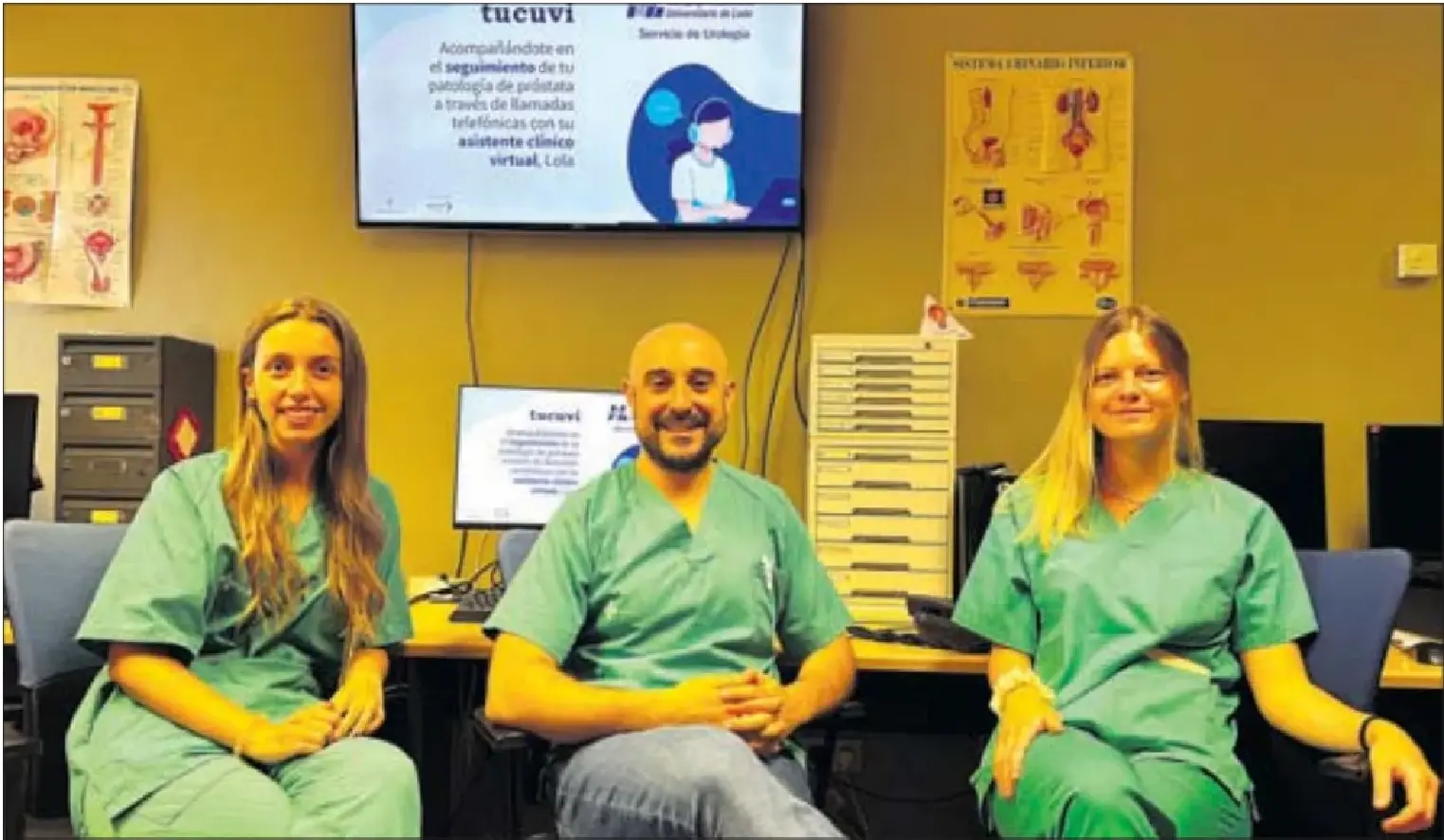
The Urology Service at Hospital Universitario de León has taken a giant step in the digitalisation of oncological medicine. Last year the hospital implemented an innovative clinical follow-up program based on conversational artificial intelligence, which it is extending through 2026 given how well it has been received, according to urologist and project coordinator Miguel García Sanz.
Through Tucuvi's technology platform, the system automates periodic phone calls to patients who have undergone a radical prostatectomy — the surgical removal of the prostate due to cancer. The core objective is to safeguard patient safety during the time that elapses between their in-person appointments at the hospital.
So far a first group of 346 patients operated on between 2018 and 2024, and who meet the necessary criteria, has been enrolled. Alongside Dr. García Sanz, the rollout is led by the specialty's resident physicians, Dr. Lucía Rodríguez and Dr. Inés Cividanes.
Who is LOLA, and what are the calls like?
The face of the program — or rather the voice — is LOLA, Tucuvi's clinical voice AI Agent, trained with natural language. Unlike rigid, traditional answering machines, LOLA holds a fluid, empathetic and natural conversation with the patient on the other end of the line. García Sanz, who has listened to the calls, describes a measured and warm voice: <it doesn't sound like a robot>. In his assessment, it is well executed.
During the call, LOLA works meticulously through a questionnaire designed by the urologists at Complejo Asistencial Universitario de León to assess quality of life and rule out complications from the surgery. The agent pays particular attention to critical symptoms such as urinary incontinence, erectile dysfunction and possible warning signs.
The first thing it does is introduce itself. It then asks whether the patient knows when his next appointment is, whether he has had blood in his urine, and whether any pain has arisen that doesn't seem normal to him.
What did the first year deliver?
1,000 calls have now been generated and, after a year, the team is pleased. A satisfaction survey was carried out with both the patients followed by LOLA and those who chose not to participate — one in twenty — and the result was 9 on a scale of 0 to 10. What they valued above all was the speed of the team's response to the alerts passed on by LOLA, because some had feared the agent would replace their physical follow-up, which is not the case.
Calls are made every three months, although the team is considering spacing them out somewhat so as not to over-contact the patient.
The first year in numbers: 346 patients operated on between 2018 and 2024, 1,000 personalised calls, 9 out of 10satisfaction and 1 in 20 patients who declined to take part.
Does artificial intelligence replace the in-person consultation?
No. García Sanz stresses that the system is entirely complementary and dispels any fear of a dehumanisation of medicine: thanks to the calls made by the AI, in-person consultations are complemented — in no case replaced — and more information is gathered on the patient's progress.
Participation is entirely voluntary. If a patient prefers not to be part of the initiative, he will keep exactly the same schedule of routine consultations he had until now.
How is the impact felt by the patient?
To understand the real impact, you shouldn't look at the hospital's computer but at the patients' phones in their homes. The agent works on three key fronts: early detection, preventing long-term patients from losing track of their lab tests, and providing psychological reassurance and accessibility for older people.
A patient operated on two years ago who begins to notice a faint trace of blood in his urine, or a sudden worsening in bladder control, often says nothing and waits six months until his next appointment — either so as not to bother the doctors, or because he assumes it is normal for his age or a consequence of the surgery.
When LOLA calls and asks him directly about that symptom, the AI detects the anomaly in his answers and immediately triggers an alert in the hospital system. The urology team reviews the case that same day and brings the in-person appointment forward before the problem worsens.
Receiving a periodic call on his own landline or mobile, where a clear voice asks him in detail how he is doing, adds an extra layer of support and reassurance, knowing that the lifeline to his specialist in León remains fully active from his own living room.
With the platform now in place, the Urology Service in León embraces proactive medicine, getting ahead of the symptom with the latest technology.
Read the original press release here
